- Home
- Health conditions
- Day Blindness, Cone Degeneration, Achromatopsia
Day Blindness, Cone Degeneration, Achromatopsia
CNGB3 Deletion, Alaskan Malamute Variant
- Eyes
This condition affects cone cells in the retina, which are responsible for color and daylight vision. Affected dogs may have difficulty seeing in bright light.
Affected dogs develop day blindness and photophobia between eight and 12 weeks of age. Normal cone function can be detected by electroretinography (ERG) in very young cd-affected pups but begins to fail at six to 12 weeks of age. While cone function is absent in mature day blind dogs, rod photoreceptors remain functionally and structurally normal throughout the dog's life.
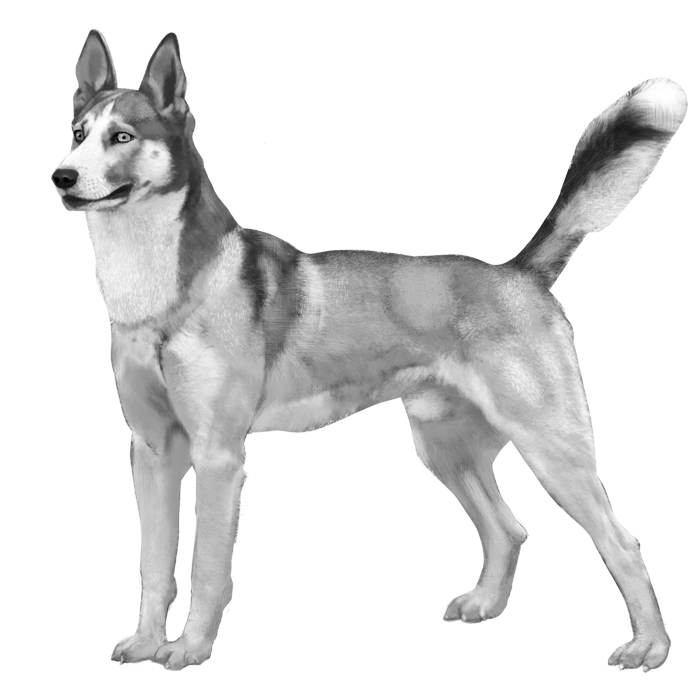
Talk to your vet about your dog’s achromatopsia result so you can work together to plan their ongoing care and monitoring.
Limit your dog’s exposure to bright sunlight and provide shaded areas for outdoor activities.
If your dog seems sensitive to light, try using tinted dog goggles or visors made for pets to help them see more comfortably in bright environments.
This variant was first observed in Alaskan Malamutes and has subsequently been identified in Australian Shepherd-type dogs. Keep in mind that eyesight can deteriorate with age due to other causes. Please consult with your veterinarian should you have any concerns about your dog’s eyesight, even if they tested clear for this variant.
Penetrance: This is a recessive variant, that is, a dog requires two copies of the variant to show signs of Day Blindness (also known as Cone Degeneration or Achromatopsia) from the variant.
- Gene
- CNGB3
- Inheritance type
- recessive
- Clinical category
- Ophthalmologic
Citations
Alaskan-type Husky
Alaskan Malamute
Australian Shepherd
Australian Shepherd
Miniature/MAS-type Australian Shepherd
Siberian Husky
Featured products
Our bestselling, most comprehensive DNA test. Includes all Breed ID features, health testing, and more.
Determine the best pairings with exclusive breeder tools.
Screen for 270+ health conditions and allergy risk in 4 categories.