- Home
- Health conditions
- Juvenile Laryngeal Paralysis and Polyneuropathy, Polyneuropathy with Ocular Abnormalities and Neuronal Vacuolation, POANV
Juvenile Laryngeal Paralysis and Polyneuropathy, Polyneuropathy with Ocular Abnormalities and Neuronal Vacuolation, POANV
RAB3GAP1, Rottweiler Variant
- Brain and Spinal Cord
This condition affects the nerves that control the airway and can develop in puppies, sometimes leading to changes in breathing. Some dogs may also develop neurologic or eye-related signs, while others may show few symptoms.
Puppies affected with JLPP tend to show signs as early as 3 months of age.
Talk to your vet about your dog’s polyneuropathy result so you can plan ongoing care and monitoring.
Watch for signs such as voice changes, noisy breathing, weakness, or difficulty swallowing, and contact your vet if you notice any of these.
Maintain your dog at a healthy weight and keep them in a calm environment. Avoid strenuous exercise or overheating, as these can worsen breathing problems.
As this condition can progress over time, supportive care and a safe, predictable routine can help keep your dog comfortable and engaged with their family.
Note: Although Embark has identified the RAB3GAP1 mutation in multiple breeds, the syndrome of JLPP has only been characterized in Rottweilers and Black Russian Terriers. This supports potential breed-related effects or other genetic factors that could impact clinical disease.
Penetrance: This disease is inherited in an autosomal recessive manner, meaning that affected dogs must have two copies of the mutation to show clinical signs.
- Gene
- RAB3GAP1
- Inheritance type
- recessive
- Clinical category
- Neurologic
Citations
Featured products
Our bestselling, most comprehensive DNA test. Includes all Breed ID features, health testing, and more.
Determine the best pairings with exclusive breeder tools.
Screen for 270+ health conditions and allergy risk in 4 categories.
Black Russian Terrier
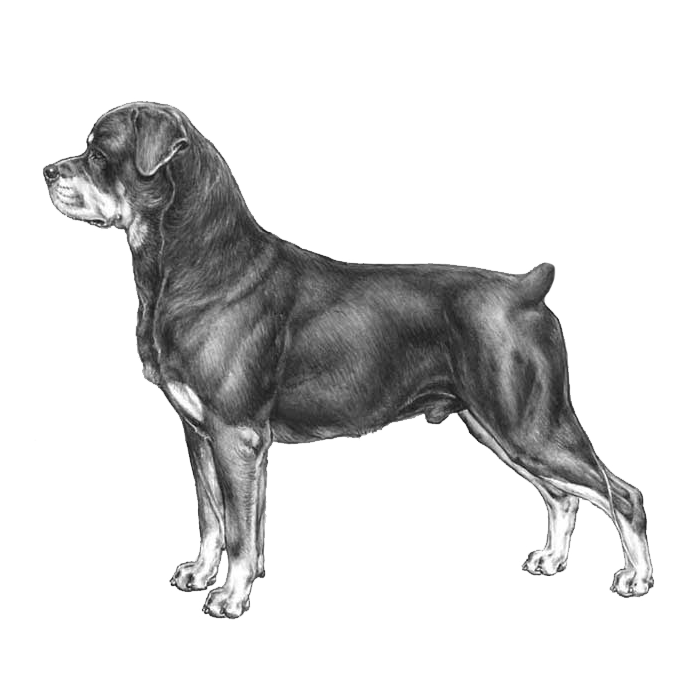
Rottweiler