- Home
- Health conditions
- Ullrich-like Congenital Muscular Dystrophy
Ullrich-like Congenital Muscular Dystrophy
COL6A1 Exon 3, Landseer Variant
- Muscular
This form of muscular dystrophy causes progressive muscle weakness and looseness, along with tightening of certain joints over time. These changes can affect strength, posture, and movement.
Affected dogs may show signs at 6-8 weeks of age with small size, reluctance or decreased ability to move, and prolonged sleeping episodes. The disease progresses into young adulthood (when dogs are typically euthanized due to quality of life concerns).
Talk to your vet about your dog’s muscular dystrophy result so you can plan appropriate monitoring and care.
Signs such as muscle weakness, stiffness, or difficulty walking may appear early in life and can progress over time.
Keep your dog’s environment calm and free from slippery surfaces to help them move safely and prevent falls.
As this condition can worsen gradually, gentle exercise, supportive care, and a predictable routine can help maintain your dog’s comfort and mobility.
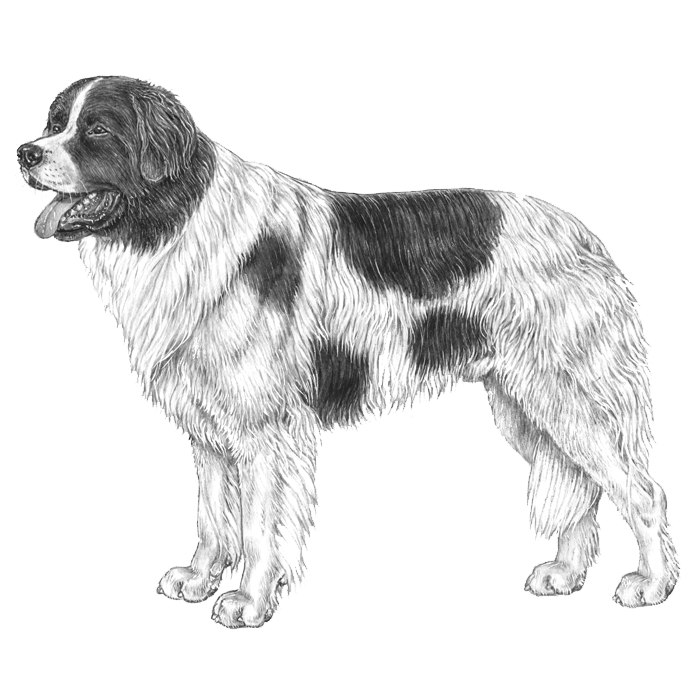
This variant was first identified in the Landseer. While researchers found this variant in Landseers and not in Newfoundlands, given the genetic similarity and the interbreeding of Landseers and Newfoundlands in certain countries, Newfoundlands with two copies of the variant would be expected to have Ullrich-Like Muscular Dystrophy.
Penetrance: Ullrich-like Congenital Muscular Dystrophy is inherited in an autosomal recessive manner, meaning that affected dogs must have two copies of the variant to show clinical signs from it.
- Gene
- COL6A1 Exon 3
- Inheritance type
- recessive
- Clinical category
- Muscular
Citations
Landseer
Newfoundland
Featured products
Our bestselling, most comprehensive DNA test. Includes all Breed ID features, health testing, and more.
Determine the best pairings with exclusive breeder tools.
Screen for 270+ health conditions and allergy risk in 4 categories.