- Home
- Dog breeds
- Boxer
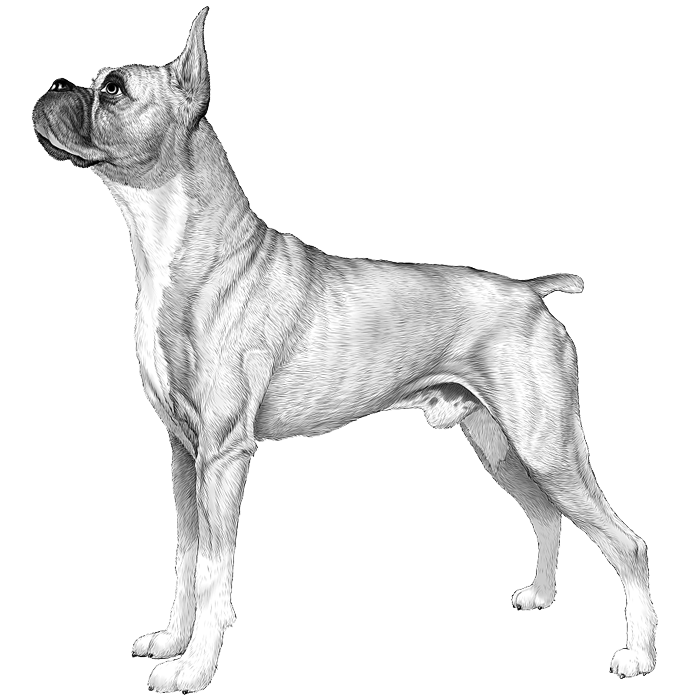
Boxer
Developed in Germany, the Boxer is a popular family dog: patient, loyal and smart-requiring lots of exercise and proper training. For active families or owners looking for a rambunctious jogging buddy, Boxers may be the perfect breed. Boxers delight their humans with their sense of humor and affectionate nature.
Fun Fact
Brandy, a boxer, hold the Guinness World Record for longest tongue (17 inches!).
Height
Male: 23-25in
Female: 21.5-23.5in
Weight
Male: 56-71lb
Female: 45-60lb
Boxers still have the intelligence and energy of their forebearers and thus need lots of exercise and proper training. Cleaning is also important as their loose, hanging lips and wrinkles tend to cause high levels of drooling. Although usually brindle or fawn colored, many non-standard boxers are white. Although not true albinos, they are at increased risk of deafness in one or both ears as well as sunburn and skin cancer.
The Boxer is a Molloser-type dog breed developed in Germany in the 19th century with a distinctive underbite and strong jaws. Although originally bred as a fighter, boxers today are patient and spirited family dogs and one of the most popular breeds in the US. The boxer is also popular with geneticists — the dog reference genome published in 2005 is from a boxer named Tasha.
Are you considering adopting a Boxer? Do you already have one in the family? We have all the information you need to make decisions about their care, including details about this breed’s physical characteristics, playtime needs, grooming tips, nutrition, and more. At the bottom of this guide, look for our comprehensive list of all the health conditions we test for here at Embark, as well as recommendations from our veterinarians for treatable diseases.
The Boxer is tightly muscular, with a squarely proportioned body. According to PetMD.com, when fully grown, these dogs are usually between 21 to 25 inches in height and weigh anywhere from 55 to 75 pounds. Their coats are shiny and short, and each pup’s colors and markings can vary. It is common for Boxers to have an additional marking called “flash,” where their chest, face, or paws are white. These pups have an alert expression, a hefty appearance, and a strong jaw.
Cleaning Boxers is very important, as their loose, hanging lips and wrinkles tend to cause high levels of drooling. Although usually brindle or fawn-colored, many non-standard boxers are white. Although not true albinos, they are at increased risk of deafness in one or both ears as well as sunburn and skin cancer.
Your Boxer’s first few weeks at home will probably be a little disorienting. It will be easier for both you and your pup if you seek to maintain a consistent routine from the very first day. For example, you might try keeping your pup’s feeding schedule and walks as invariable as possible, so your doggo will know what to expect every day.
If you are looking to adopt a Boxer from an animal shelter or find a breeder, it’s important to look for breeders that can provide detailed health records for their puppies (and parents!) as well as genetic testing for health conditions. The Orthopedic Foundation for Animals (OFA) and their Canine Health Information Center (CHIC) maintains a voluntary database of Boxers and their health screening results.
Your pup’s diet should be appropriate for their age. The AKC writes that some Boxers are prone to becoming overweight, so watch their calorie consumption and weight level. Treats can be an important aid in training, but giving too many can cause obesity. Check with your vet if you have any concerns about your dog’s weight or diet. Clean, fresh water should be available at all times.
Boxers still have the intelligence and energy of their fighting forebearers and thus need lots of exercise and proper training. Vetstreet.com recommends a fair amount of activity for your Boxer as an outlet for any excess energy. These activities can include playing fetch, long walks, or training for agility. Additionally, this breed loves to have a job to do! Their ancestors were all-purpose farm dogs whose jobs included catching and driving livestock, so your Boxer will really enjoy time outdoors with their attention focused on specific athletic tasks.
Boxers have smooth, short single coats so they don’t require excessive grooming, but Animal Planet recommends you clean out their face wrinkles to prevent infections. These pups need baths only when necessary. They are moderate shedders and will need their nails trimmed if not worn down naturally through play and normal activity.
According to PetMD, Boxers have an average lifespan of 8 to 10 years and suffer from both minor ailments and more complicated diseases as they age. Normal aging also comes with other changes to sleep, exercise needs, and weight.
Getting your pup tested with Embark will arm you with as much information as possible to ensure your dog is healthy while potentially avoiding preventable diseases.
Want to get know even more about your Boxer? Get your Embark Dog DNA Test today!
Breed identification
Learn about your dog's genetic ancestry with 99% accuracy.
Our bestselling, most comprehensive DNA test. Includes all Breed ID features, health testing, and more.
Get a breakdown of your dog's ancestry and find their relatives.
The best choice for rescue dogs to learn as much as possible from their DNA.
Discover your dog's ancestry and estimated birthday.