- Home
- Dog breeds
- Greyhound
Greyhound
The Greyhound is a breed unmatched in speed. This ancient dog has been used for hunting and racing, but they make wonderful companions. Surprisingly, this breed is often described as a couch potato!
Fun Fact
The first knowledge of the Greyhound is found in the Tomb of Amten, dating back between 2900 and 2751 BC.
Height
Male: 25-30in
Female: 25-30in
Weight
Male: 65-85lb
Female: 50-65lb
The Greyhound is a dog breed best known for speed and running ability. With an aerodynamic body structure, Greyhounds are capable of reaching speeds of 45 miles per hour. While they’re controversially used for racing, they are also wonderful family pets. There has been a huge national movement to adopt out retired Greyhounds. They make lovable companions that are great with children, but it is important to keep them on a leash.
Do you have a Greyhound or are you thinking of welcoming one into your family? This article has all the information you need on caring for your dog — from playtime tips to grooming information. You’ll also find a list of the genetic health risks Embark tests for that are relevant to this breed.
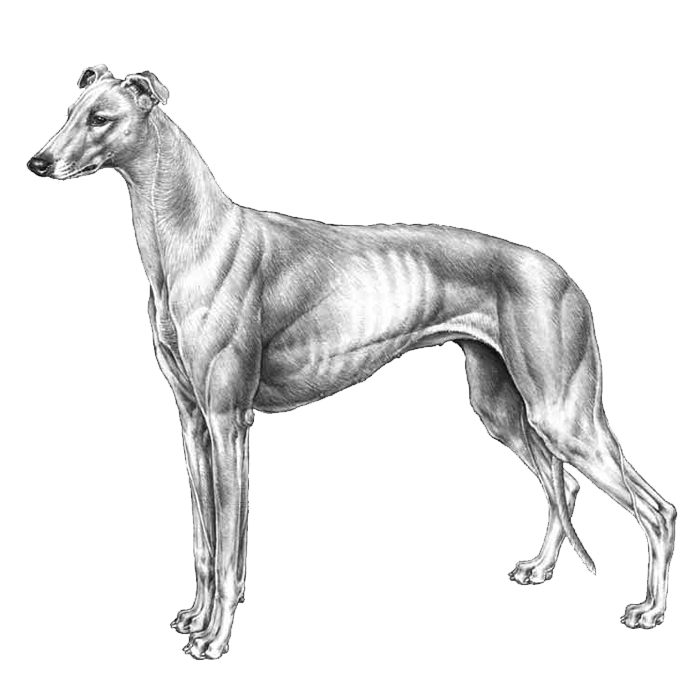
Greyhounds are built for speed with a thin light build. The AKC describes the ideal shape as an “inverted S” with a tightly tucked waist transiting into a deep chest. Show Greyhounds are slightly larger than their racing counterparts. Their coat is short and smooth, but they do shed regularly. They can come in a wide variety of colors, including black, white, fawn, red, grey, white, and brindle.
Their ears are small and fold backward unless pricked up from excitement and their tail is long and thin, curving upward at the end.
Because they were bred to chase and hunt small prey, Greyhounds should be carefully introduced and supervised around cats and other small pets. Considered to be gentle but independent, Greyhounds are extremely intelligent, but some people mistakenly assume they aren’t very trainable. Greyhounds, like other sighthounds, were originally bred to course, or hunt by sight. Greyhounds had to pursue games independent from humans to do their job well. Many other hunting breeds were developed to work collaboratively with humans, whereas Greyhounds needed minimal direction and made decisions independently as they hunted. This independence remains a key aspect of the breed’s temperament.
Like other sighthounds, Greyhounds have a very high metabolism and often need more calories and a higher protein level in their diet than other breeds. Talk with your vet about the right high-quality food for your dog and the amount you should be feeding them.
Greyhounds have a very short slick coat with no undercoat and have minimal grooming needs. Regular baths and going over their coat with a soft brush or grooming mitt weekly is all this breed will need to keep their coat in good condition. Similar to all breeds of dog, your Greyhound’s nails will need regular trimming to maintain a healthy short length. Greyhounds also need to have their ears regularly cleaned and their teeth brushed.
Greyhounds need regular mental and physical stimulation including walks and training. The ability to regularly run is very important for this type of dog. However, they should not be permitted to run off-leash outside of a safely fenced yard or other fenced areas. Like other sighthounds, Greyhounds are likely to chase small animals and risk running off and being lost or injured.
While this breed might enjoy the high-speed chase, they are equally as comfortable at home on the couch with their guardians. In recent years, there’s been a growing trend of Greyhounds who retire from commercial racetracks being adopted as loving family pets, increasing the popularity of the breed.
Because Greyhounds have developed over hundreds and thousands of years to be powerful sprinters and long-distance runners, the breed has some unique health features. This includes a naturally lower resting heart rate than other breeds and lab work that can look different from other dogs. Veterinary experts at Ohio State University have documented that Greyhounds may have diseases and lab values that are abnormal for most breeds of dogs, but normal for Greyhounds.
A Greyhound typically lives between 10-13 years.
Do you own a Greyhound or do you think your dog might be part Greyhound? Learn more about your dog with Embark’s Dog DNA Tests, the most accurate on the market.
Breed identification
Learn about your dog's genetic ancestry with 99% accuracy.
Our bestselling, most comprehensive DNA test. Includes all Breed ID features, health testing, and more.
Get a breakdown of your dog's ancestry and find their relatives.
The best choice for rescue dogs to learn as much as possible from their DNA.
Discover your dog's ancestry and estimated birthday.