


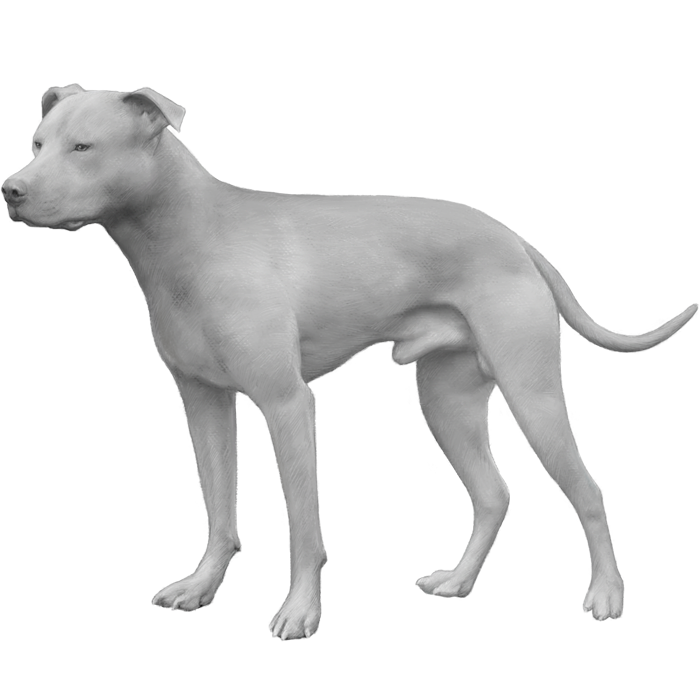
American Pit Bull Terrier
Few dogs are more recognizable than the American Pit Bull Terrier. While they originated in the British Isles and are descendants of the Mastiff-type dogs introduced to England in antiquity, the American Pit Bull Terrier was brought over to the United States by English immigrants in the 1800s. They quickly became one of the most popular and widespread breeds there.
Though they are descended from the bull-fighting breeds of England and still have a scary sounding name, the American Pit Bull Terrier is a sweet, talented, and affectionate dog.
American Pit Bull Terriers have been subject to a significant amount of controversy due to their tendency to fall prey to dog fighting rings and unscrupulous owners. Because of their high energy, strength, and eagerness to please, they have sometimes become popular for the wrong reasons.
The truth is that American Pit Bull Terriers are best as family dogs—they tend to get along very well with children and enjoy the company of their family members. American Pit Bull Terriers can be tricky with other dogs, male or female, so it is best to do a lot of research before bringing an American Pit Bull Terrier into a home with other dogs. It will be a matter of personality and the individual dogs involved, so be sure to consult the shelter or breeder. However, it is much easier to introduce an American Pit Bull Terrier to other dogs when they are puppies.
American Pit Bull Terriers have proven themselves to be multifaceted and multitalented dogs. They have served as search and rescue dogs and therapy dogs, and they excel at dog sports such as weight pulling and agility. They are working dogs, so they do require a decent amount of physical activity and thus are not always well-suited to apartment living. They prefer a suburban or rural home, but they can still thrive in the city. As long as they are given enough opportunity to run around, whether at a park or jogging with their beloved master, American Pit Bull Terriers can be very adaptable dogs.
Due to some breed specific legislation, American Pit Bull Terriers are not allowed in certain countries and certain cities. It’s important to check the local laws before welcoming one of these dogs into a home. If adopted responsibly, treated correctly, and properly trained, American Pit Bull Terriers can make exemplary pets and wonderful additions to any family.
Though they are descended from the bull-fighting breeds of England and still have a scary sounding name, the American Pit Bull Terrier is a sweet, talented, and affectionate dog.
American Pit Bull Terriers have been subject to a significant amount of controversy due to their tendency to fall prey to dog fighting rings and unscrupulous owners. Because of their high energy, strength, and eagerness to please, they have sometimes become popular for the wrong reasons.
The truth is that American Pit Bull Terriers are best as family dogs—they tend to get along very well with children and enjoy the company of their family members. American Pit Bull Terriers can be tricky with other dogs, male or female, so it is best to do a lot of research before bringing an American Pit Bull Terrier into a home with other dogs. It will be a matter of personality and the individual dogs involved, so be sure to consult the shelter or breeder. However, it is much easier to introduce an American Pit Bull Terrier to other dogs when they are puppies.
American Pit Bull Terriers have proven themselves to be multifaceted and multitalented dogs. They have served as search and rescue dogs and therapy dogs, and they excel at dog sports such as weight pulling and agility. They are working dogs, so they do require a decent amount of physical activity and thus are not always well-suited to apartment living. They prefer a suburban or rural home, but they can still thrive in the city. As long as they are given enough opportunity to run around, whether at a park or jogging with their beloved master, American Pit Bull Terriers can be very adaptable dogs.
Due to some breed specific legislation, American Pit Bull Terriers are not allowed in certain countries and certain cities. It’s important to check the local laws before welcoming one of these dogs into a home. If adopted responsibly, treated correctly, and properly trained, American Pit Bull Terriers can make exemplary pets and wonderful additions to any family.
Breed identification
Learn about your dog's genetic ancestry with 99% accuracy.

Sale

Sale

Sale

Sale